We use analytics and advertising cookies to improve the experience and support the platform.
See our Privacy Policy.
Resources > Rules > How to Play
How to Play
A simple beginner guide: setup, mana, turns, combat, and your first game.
Magic: The Gathering is a card game for two players. Each player starts with 20 life and a deck of 60 cards. Your goal is to reduce your opponent's life total to zero before they do the same to yours.
You cast spells, put creatures on the battlefield, and find your way to zero. There are many paths to win, and that's part of what makes the game interesting.
Overview
What Happens in a Turn
Every turn follows the same five steps. Here's the shape of a turn before we get into the details.
Untap - Your cards become ready to use again.
Draw - You draw one card from your deck.
Play cards - Play one land and cast any spells you can afford.
Combat - Attack your opponent with your creatures.
End turn - Pass the turn to your opponent.
Cards
Reading a Card
Every Magic card follows the same layout. Knowing where each piece of information lives makes everything easier to follow.
The mana cost sits in the top-right corner. The type line tells you what kind of card it is. Power and toughness only appear on creatures, in the bottom-right corner.
Card Types
Card Types
Five categories of cards. Each one plays a different role in your deck and on the battlefield.
Lands - Produce mana, which you spend to play other cards. You can play one land per turn.
Creatures - Attack your opponent and block incoming attacks.
Sorceries and Instants - One-time spells. They happen and then go to the graveyard.
Artifacts and Enchantments - Stay on the battlefield and keep applying their effect every turn.
Planeswalkers - Powerful allies with special abilities you can activate once per turn.
Battlefield
The Battlefield
The battlefield is the shared play area where cards live. Most of the game happens here.
What Is the Battlefield?
When you play a land or cast a creature, artifact, enchantment, or planeswalker, it goes to the battlefield and stays there. Cards on the battlefield keep doing their thing until something removes them, such as a spell, combat damage, or an ability.
Cards that leave the battlefield typically go to the graveyard. Anything that stays in play is called a permanent.
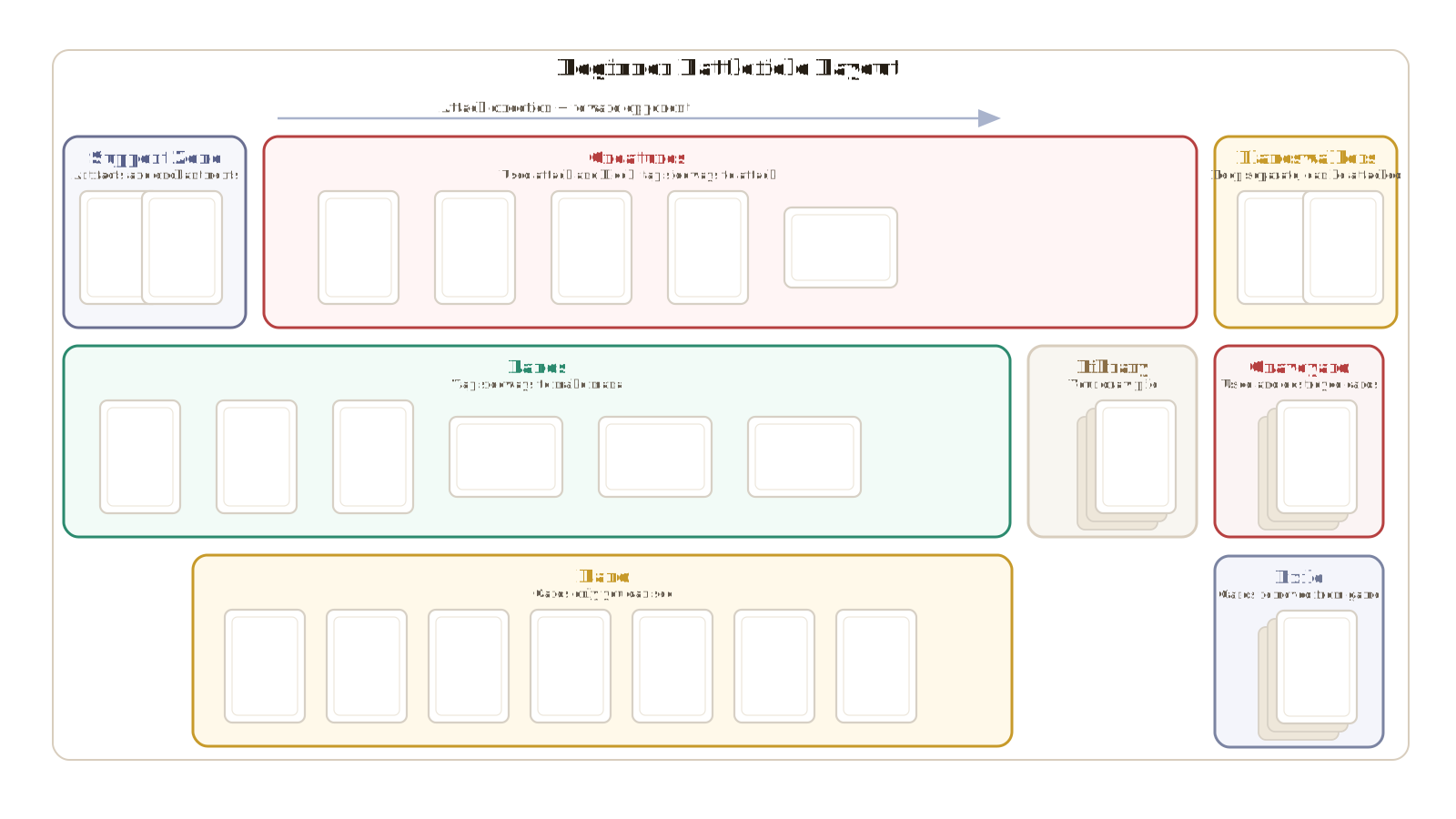
Creatures stay in the top middle row, where they attack and block. Lands go in the bottom row and tap to generate mana. Your library, graveyard, and exile zone sit on the right side.
Tapping
Tapping means turning a card sideways to show it has been used. A tapped card cannot be tapped again until it untaps at the start of your next turn.
A tapped card turns 90 degrees sideways. It returns upright automatically at the start of your next turn.
Lands tap to produce mana, which you spend to cast spells.
Creatures tap when they attack. A tapped creature cannot block.
Some abilities require tapping as their cost, written as "Tap: do something."
All your cards untap automatically at the start of your turn. You do not need to do anything.
Summoning Sickness
This is one of the most important rules to learn early.
When a creature enters the battlefield, it has summoning sickness. That means:
It cannot attack the same turn it enters the battlefield.
It cannot use abilities that require tapping that turn.
Starting on your next turn, it can attack and tap normally.
Think of it this way: a creature just arrived. It needs one turn to get its footing before it can charge into battle.
Permanents
A permanent is any card that stays on the battlefield, so lands, creatures, artifacts, enchantments, and planeswalkers. Each plays a different role:
Creatures - Attack and block. They are your main tools in combat.
Everything else - Stays on the field and applies its effect continuously each turn.
Combat Basics
During your turn, you can attack with any untapped creature that does not have summoning sickness. Your opponent then chooses which of their creatures block.
If a creature is not blocked, its damage goes directly to the opponent's life total.
If a creature is blocked, both creatures deal damage to each other at the same time.
A creature that takes damage equal to or greater than its toughness goes to the graveyard.
Mana
Mana
Mana is the resource you spend to cast spells. Each land produces one mana when you tap it. Tapped lands cannot produce mana again until they untap at the start of your next turn. Unused mana disappears at the end of each step, you cannot save it for later.
There are five colors in Magic, each linked to a basic land type:
White - Plains
Blue - Island
Black - Swamp
Red - Mountain
Green - Forest
There is also Colorless mana, associated with the basic land type Wastes.
Reading a Mana Cost
Every card shows its cost in the top-right corner. A cost is made up of two parts, generic mana and colored mana, read left to right.
Generic mana: pay this many mana of any color or colorless. Tap any lands.
Colored mana: must be paid with mana of that specific color.
Variable cost: you choose how much to pay. More mana usually means a bigger effect.
Cost Examples
: one green mana. Tap one Forest.
: two generic plus one blue. Tap three lands, at least one producing blue.
: three generic plus two white. Tap five lands, at least two producing white.
: one generic plus two red. Tap three lands, at least two producing red.
: choose a value for X, pay that plus two generic and one black.
Tip: The total number of symbols in a cost is its mana value. A spell has a mana value of 3.
Turn Order
Turn Structure
Here's each step of a turn in full. You go through this sequence every turn, and so does your opponent.
Untap Step
All your tapped cards return upright. Lands are ready to produce mana again, and creatures can attack or block.
Draw Step
Draw the top card of your library and add it to your hand. The player going first skips this draw on their very first turn.
Main Phase
You may play one land from your hand. You may also cast as many spells as you have mana for: creatures, sorceries, artifacts, enchantments, planeswalkers, whatever you can afford.
Combat Phase
Choose which untapped creatures attack. Creatures played this turn cannot attack yet.
Your opponent chooses which of their creatures block.
Damage is dealt. Unblocked creatures deal their power directly to the opponent's life total.
Creatures that took lethal damage go to the graveyard.
End Step
If you have more than 7 cards in hand, discard down to 7. Then your turn ends and your opponent begins theirs.
Order: Untap - Draw - Main - Combat - End
Example
An Example Turn
Let's walk through a real turn so you can see how everything fits together.
The Setup
You already have a 2/2 Wolf on the battlefield from last turn. You have 4 lands in play, all untapped. In your hand: a 3/3 Bear (costs 2 green mana) and a Forest.
Step by Step
Untap: Your 4 lands and your Wolf all untap. They are ready to use.
Draw: You draw a card and add it to your hand.
Main Phase: You play the Forest. Now you have 5 lands. You tap 2 Forests to pay for the Bear and cast it. The Bear enters the battlefield, but it has summoning sickness and cannot attack this turn.
Combat: You declare your Wolf as an attacker. It taps and swings in. If unblocked, it deals 2 damage to your opponent. Your Bear stays back because it just arrived this turn.
End turn: You pass to your opponent. Next turn, both the Wolf and the Bear can attack.
Key point: The Wolf attacked because it was on the battlefield since last turn. The Bear could not attack because it just arrived. Next turn, both go in.
Setup
Mulligan
Before the game starts, both players draw 7 cards. If your opening hand is not playable, you can mulligan, but it will cost you a card.
Draw your opening hand of 7 cards.
If you do not like it, declare a mulligan: shuffle your hand back into your library and draw 7 new cards.
After drawing your new hand, put cards from it face-down on the bottom of your library equal to the number of mulligans you have taken. A first mulligan costs 1 card, a second costs 2, and so on.
Repeat until you are happy with your hand or decide to keep whatever you have left.
Tip: A hand with no lands is almost always a mulligan. So is a hand with 6 or 7 lands. You are looking for 3-4 lands and a mix of low and mid-cost spells.
Combat
Combat in Detail
Combat is the main way to deal damage. Here's a closer look at how it plays out, step by step.
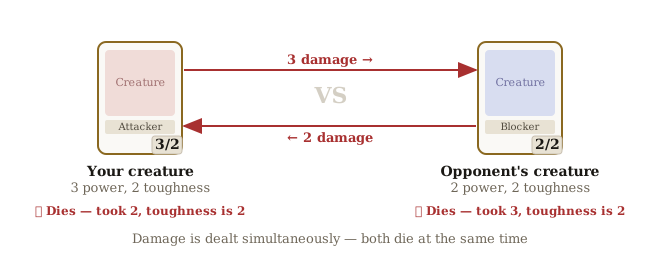
Your 3/2 attacks into an opponent's 2/2. Both creatures deal their damage at the same time. The 2/2 takes 3 (lethal), and your 3/2 takes 2 (lethal). Both die.
Unblocked Attackers
If the opponent does not block a creature, its damage goes directly to their life total.
A 3/2 that is not blocked deals 3 damage to the opponent's life total.
Unblocked creatures do not take any damage themselves.
You choose which creatures attack. There is no requirement to attack with all of them.
Tip: Attacking with a small creature into a large one is usually a bad trade. Think about whether the damage is worth losing the creature.
Multiple Blockers
The defending player can assign more than one creature to block a single attacker.
The attacking player chooses the order the blockers receive damage.
Damage must fully kill each blocker in order before any overflow goes to the next.
All blockers deal their damage to the attacker simultaneously, regardless of order.
Example: Your 5/5 is blocked by a 2/2 and a 3/3. You order the 2/2 first, it takes 2 (lethal), the remaining 3 kills the 3/3. Your 5/5 takes 5 total and also dies.
Tips
Starter Tips
A few things that will save you from the most common beginner mistakes.
Play one land every turn when possible.
Do not spend your full hand too early.
Attack when you can still block on the next turn.
Read each card carefully. Most rules are printed on it.
Formats
Other Formats
Everything here covers a standard two-player game, but Magic has plenty more to offer once you are comfortable with the basics.
Commander: probably the most popular way to play casually. It's a four-player format built around a legendary creature that leads your 100-card deck, no duplicates allowed aside from basic lands. Games tend to be chaotic, political, and a lot of fun.
Draft: the opposite of Commander. You sit down with a few booster packs, pick cards one at a time, pass the rest along, and build a deck on the fly. No preparation, just instinct and card knowledge.
Jumpstart: the quickest way in. Open two themed half-decks, shuffle them together, and you're ready to play in minutes. Great for a casual game when you don't want to think too hard about it.
Whatever format you end up playing, the core is always the same: cast spells, put creatures on the table, and knock your opponent to zero. Go have fun.
 Colorless mana, associated with the basic land type Wastes.
 Generic mana: pay this many mana of any color or colorless. Tap any lands.



 Colored mana: must be paid with mana of that specific color.
 Variable cost: you choose how much to pay. More mana usually means a bigger effect.